
May 14, 2026
Heard it on the Grapevine V: The Year of the Horse
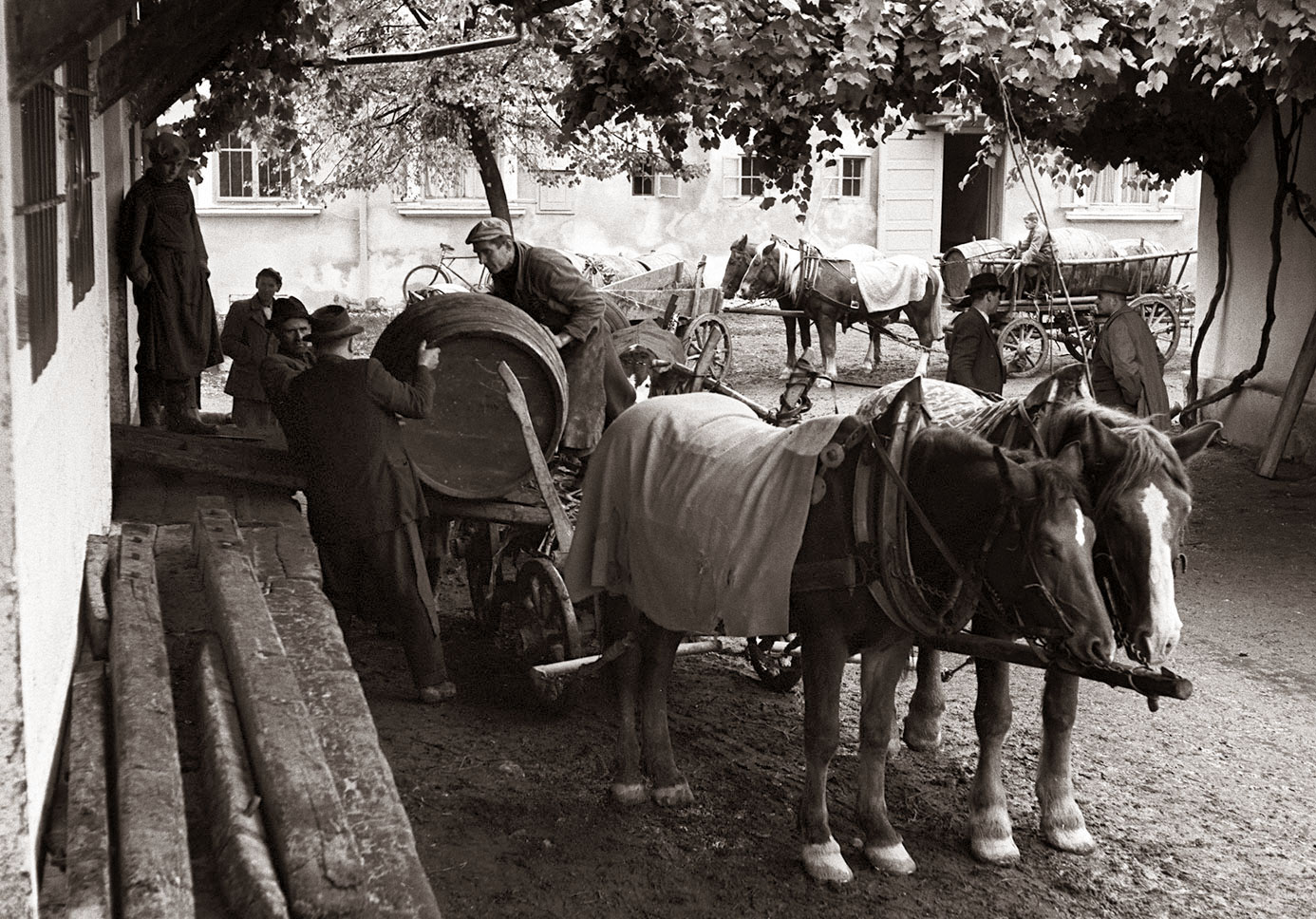
There’s a romantic image of wine-growing that you’ll probably recognise from postcards: horse-drawn carts and ploughs weaving through acres of scenic vineyards, guided by a smiling proprietor basking in the golden sun.
Reality will surely disappoint next to this bucolic vista. Many vineyards are now managed with – you guessed it – inanimate machinery. Mechanical beasts like the tractor are cheaper to operate, easier for staff to manage, and they deliver predictable results. A working horse is the product of years of investment, training, vet bills, stables and feed. These noble creatures demand farmers who are patient and willing to manage the animal’s moods and habits. A tractor just needs the occasional oil change. Soon, we imagine, these old techniques will fall entirely by the wayside.
…Or will they? For numerous vineyards are claiming the future with knowledge from the past, and using horses to pull ploughs and cultivators, remove weeds, and move carriages of grapes during harvest. They’re not doing it to look Instagrammable—there are benefits to these methods that modern machinery can’t replicate.
A central benefit is to the vineyard’s soil. To grow grape vines, soil needs to have good drainage, ensuring that the vines have enough water to grow but not so much that mildew develops. Heavy tractors compact the soil, damaging its structure and therefore the conditions needed for healthy vines. Acclaimed producers like Domaine de la Romanée-Conti—whose wines you can find in our store—use horses to avoid this very problem.
Bulky machinery can also disturb or injure vines as they pass, whereas a well-trained horse is more agile, and easier to stop if a plough gets caught on plants or roots. Especially in older vineyards, established on steep slopes or with narrow, winding routes, tractors may struggle to manoeuvre with ease. Machines create more greenhouse gases than horses, which can also eat weeds and have the added benefit of producing extra fertiliser for the fields, to put it delicately.
With all these benefits in mind, viticulturists both in the New World and the old are re-adopting horses, from Chile’s Odfjell Vineyards to France’s Champagne Drappier. Some of the wineries involved are relatively new, such as Washington State’s cult label Horsepower Vineyard. Founded by Frenchman Christophe Baron, it employs high-density planting that Baron believes yields better fruit. This, alongside his commitment to biodynamic agricultural techniques, meant that using horses was an ideal choice.
In France, industry groups for horse-trainers and winegrowers are supporting this trend, and well-established producers are getting involved and making the switch too. Isabelle Pangault, owner of the Sologne estate L’Affût, found that horses were not only suited to navigating around their centuries-old vines but also avoided exposing grape-pickers to noisy, smoke-spewing tractors.
Perhaps that final benefit—creating pleasant environments for workers and animals alike—is an intangible way in which this technique creates better wine. Heavy machinery is in competition with nature, seeking to control and to eliminate, but working with animals can foster a more harmonious attitude and a healthier place of work. The presence of horses in a vineyard are a reminder that wine isn’t just a product, but something full of life and tradition, to be cultivated with care.